
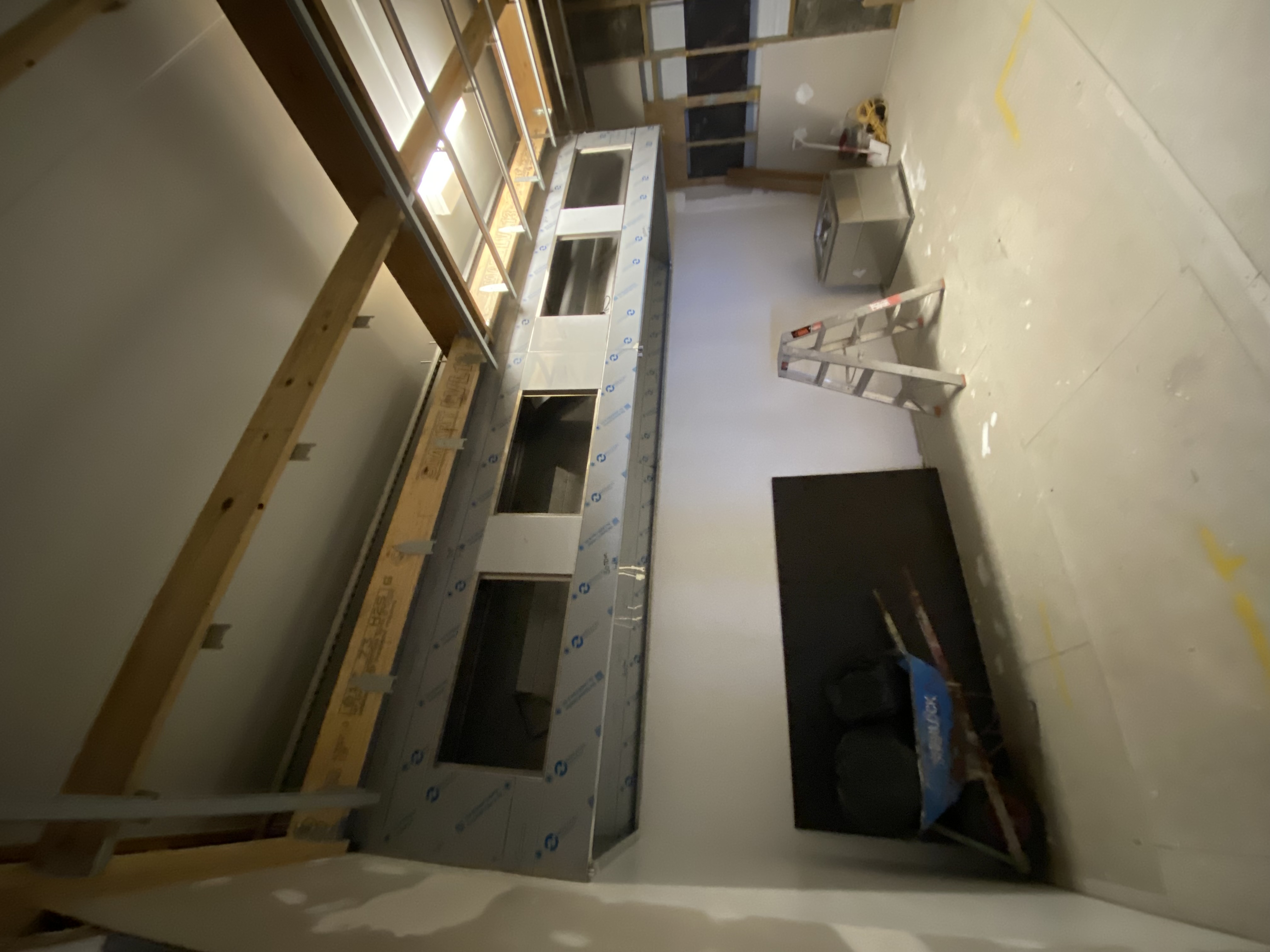
If you're opening or upgrading a commercial kitchen on the Gold Coast, the exhaust canopy is one of the first things your certifier and council will look at. It has to capture the heat, grease and smoke from your cooking line, and it has to be built and installed to Australian Standards.
We fabricate stainless exhaust canopies and ductwork in our Arundel workshop, and install them across the Gold Coast, Brisbane and northern NSW. Fans, grease filters and fire suppression come from your mechanical and fire contractors. This guide covers which standards apply, what's changed recently, and how to get a canopy approved without late redesigns.
This is a general guide, not design advice. Your mechanical engineer designs the system and confirms it complies.
The two standards that matter
Commercial kitchen exhaust in Australia is covered by two parts of AS 1668. The National Construction Code points to both.
AS 1668.2: ventilation. This sets how much air your canopy needs to exhaust, which depends on the type of cooking. It also sets canopy types and how far the canopy has to overhang the equipment.
AS/NZS 1668.1: fire and smoke control. This covers how the ductwork is built and run through the building, so a fire in the duct stays in the duct. Fire dampers aren't allowed in kitchen exhaust ducts, because grease build-up can stop them closing. So the duct and fan have to contain a fire on their own.
On top of the standards, your council will want to see the system certified before it signs off your food business licence.
Do you need a canopy?
In most commercial kitchens, yes. Whether a canopy is required depends on the total power of the cooking equipment, the type of cooking, and how close the appliances are to each other.
Domestic rangehoods generally don't meet commercial requirements. Recirculating (ductless) units can suit some low-impact setups, but they aren't a blanket replacement for a ducted canopy. Check with your engineer before you rely on one.
What changed in the 2024 update to AS 1668.2
AS 1668.2 was updated in 2024. Which version applies to your project is a question for your mechanical engineer and certifier, but it's worth knowing the update exists. In general terms, it:
changes how some cooking equipment is classified, especially appliances that produce steam and grease
adds a separate category for wood-fired and charcoal cooking
increases the minimum canopy overhang for some types of cooking
means several small appliances grouped together can need exhaust, even if each one alone wouldn't
The practical point: if you're replacing equipment, changing your menu or taking over an existing tenancy, don't assume the old canopy still works. Have your engineer check it before you commit to the fit-out.
What makes a good canopy
Built to the engineer's design. The canopy size, type and overhang come from your mechanical engineer's design. We build to it.
Stainless steel construction. It's non-combustible, easy to clean and doesn't corrode in the heat and grease.
Fully welded or sealed seams, so grease can't leak out of the canopy.
Made to suit the filters specified, so your mechanical contractor's filters drop straight in.
Ductwork built for cleaning, with access points so the duct can be inspected and cleaned.
A good fit to the kitchen, working around ceilings, walls and other services.
From design to install
Engineer's design. Your mechanical engineer works out the canopy type, size and airflow from your equipment list.
Shop drawings. We prepare or check the shop drawings for the canopy and ductwork, and confirm site measurements.
Fabrication. The canopy and ductwork are made in stainless in our Arundel workshop.
Install. We install the canopy and ductwork on site, coordinated with your builder, shopfitter and other trades.
Fans, filters and fire suppression. Your mechanical and fire contractors supply and fit these.
Commissioning and certification. The system is tested and certified by others so your council can approve it.
Looking after it
Grease builds up inside every exhaust system, and grease is a fire risk. Filters need regular cleaning, and ducts need professional cleaning on a schedule. Many insurers ask for records of it. A canopy that's easy to get into and clean makes that cheaper and quicker.
Need a canopy made?
Send us your engineer's design or your kitchen drawings and we'll come back with a free, no-obligation quote. Call Tyler on 0497 829 990, email admin@trsfabrication.com.au, or request a quote online.
See our exhaust canopy and ductwork services, or read why commercial kitchens use stainless steel.